2023-
A research and photography project documenting vulcanizer shops across West Africa, beginning in Ghana and recently extending to Burkina Faso. At its core is a map highlighting the locations of shops across various regions. Findings are shared through journals and translated into sculptures and image-based works.
Digital collage, photographic prints on FujiColor Crystal Paper
2025
The Past Is Not the Present explores the evolution of Ghana’s tire industry—from a once-thriving industrial powerhouse to its current state—through layered overlays of past and present imagery. The series asks what lessons the past can offer and how we might imagine a future of renewal and growth. These digital collages are printed on archival photographic paper, preserving the work with clarity and depth.
2:30 minutes
2025
First presented at
Biennale Internationale de Sculpture de Ouagadougou (BISO)
This video observes vulcanizers at work—mending tires, pumping air, and carrying out steady acts of repair. Presented in a split-screen format, two scenes unfold side by side, drawing attention to the focus, skill, and care embedded in these repetitive gestures. The Act of Labour foregrounds the quiet value of everyday work and the people whose labor sustains movement, circulation, and daily life.

Inner Tube Market: Waste as Commodity
Repositioning discarded inner tubes as commodities through market display
DELA ANYAHSep 30, 2025The Ghanaian Basket Trade: My Foundation
In Ghana’s agricultural trade networks, woven baskets serve as the primary vessels for transporting goods from rural farms to urban centers and local communities. These baskets, marked with spray-painted numbers or farm logos, carry produce—yams, plantains, cassava, tomatoes, and countless other goods—through various supply chains.
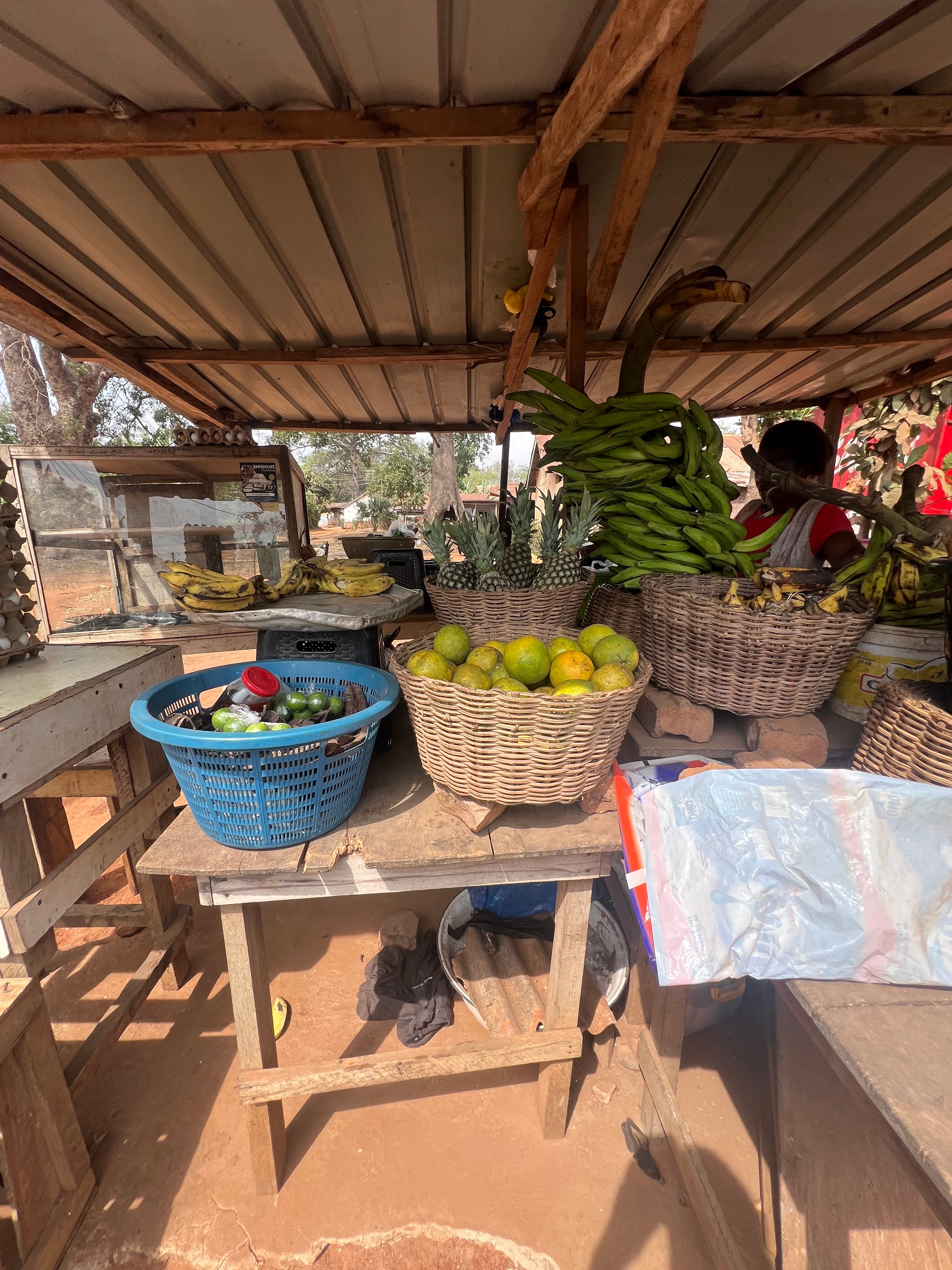
But what fascinated me was a revealing cycle of utility and disposal that happens everywhere from major markets to small local shops. Upon arrival at their destinations—whether large markets, neighborhood stores, or kenkey sellers’ stalls—these transport baskets often become expendable. Their utility expires with delivery. Many are discarded entirely, left to deteriorate, while others find second lives as containers for different goods, their original farm markings becoming palimpsests of previous economic transactions.
I’ve gathered the baskets for my installation from various sources: small local shops within communities, kenkey sellers who had transported tomatoes to make pepper for sale, neighborhood vendors. This dispersed pattern of basket use and discard reveals how widespread this cycle is—it’s not confined to major markets but happens throughout Ghana’s commercial ecosystem, from the largest trading centers to the smallest corner shops.
From Vulcanizer Shop to My Studio: Seeing Value in Waste
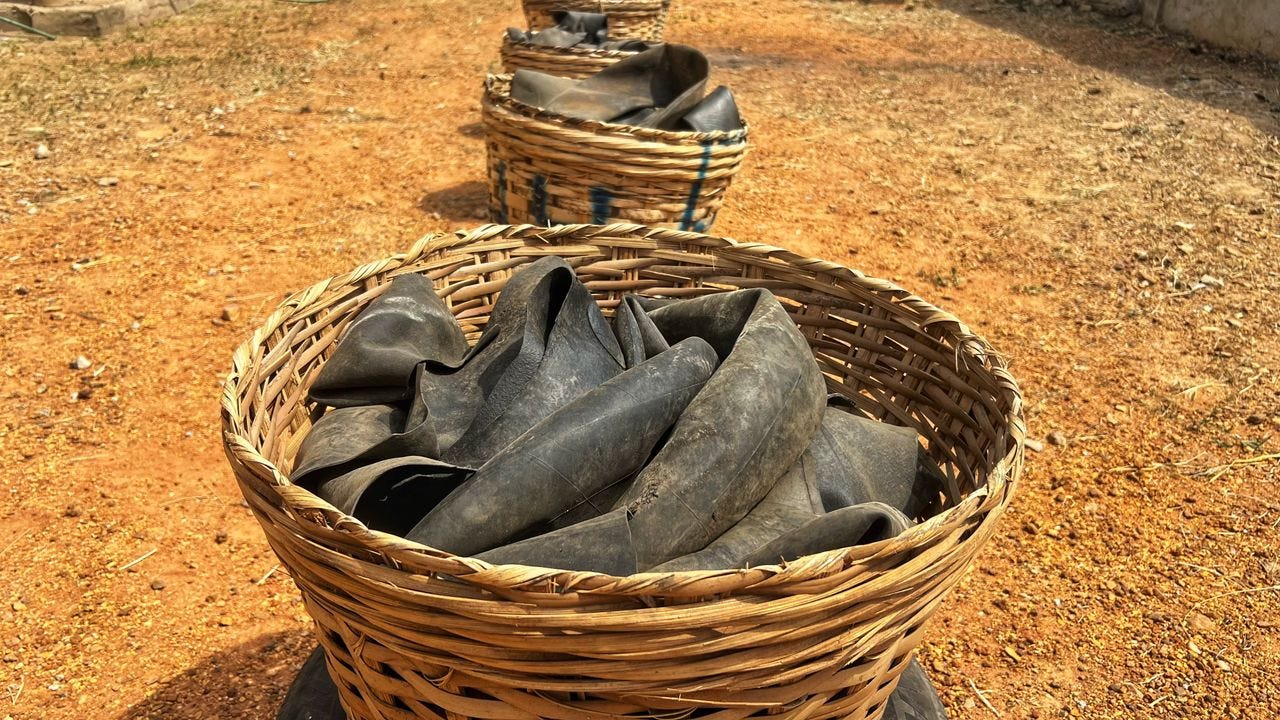
My Inner Tube Market installation begins with my regular visits to vulcanizer shops around Accra. In these spaces, discarded inner tubes accumulate as automotive waste—punctured, patched multiple times, finally deemed beyond repair. To the vulcanizer, these tubes exist in a liminal state: no longer functional, not yet disposed of, simply occupying space as materials awaiting final discard.
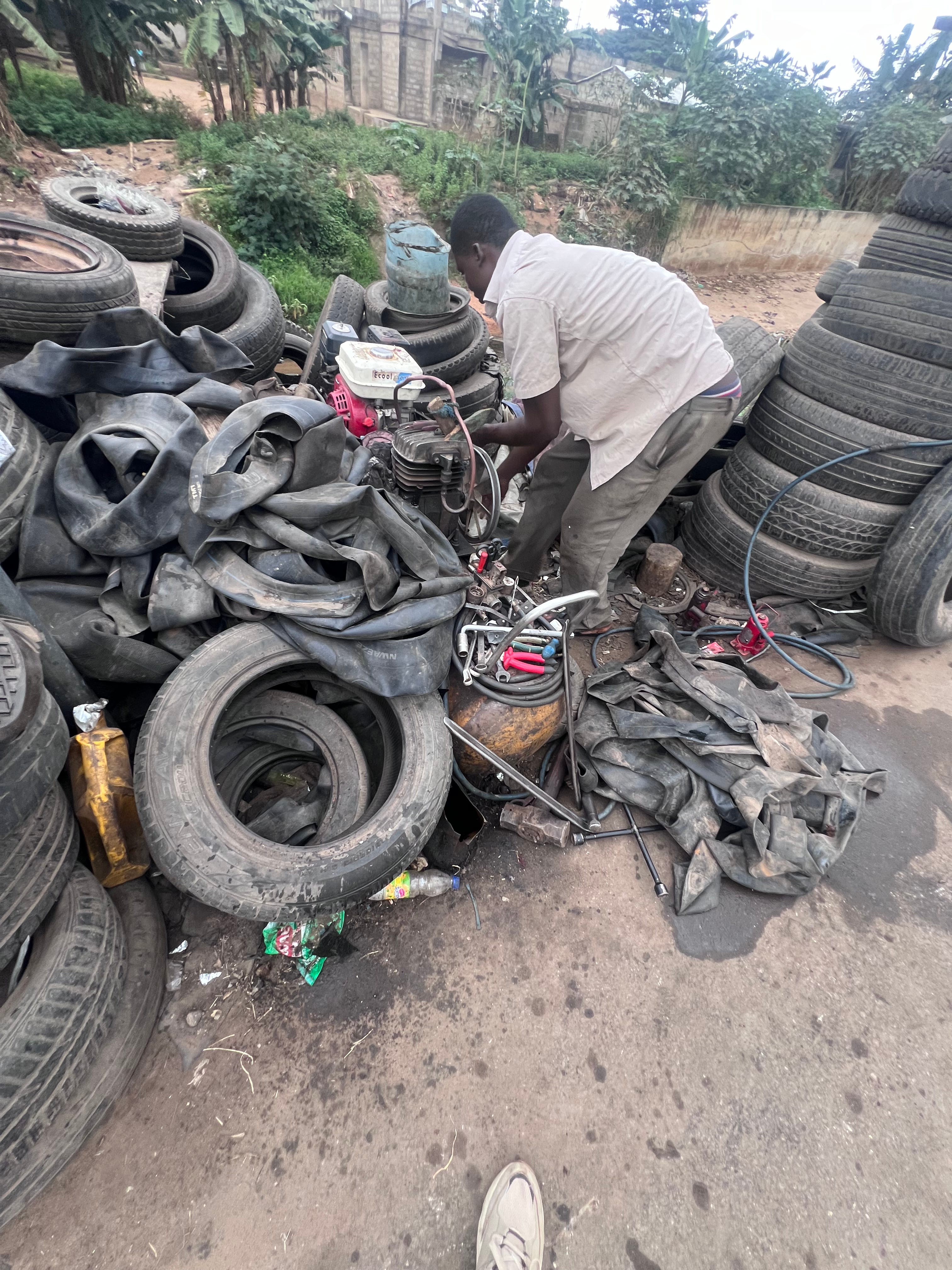
But I see something different in these accumulations. Where vulcanizer shops see waste, I perceive potential commodities. This shift in perspective became the foundation of my installation. When I gather these tubes from the shops, I’m already beginning the process of transformation—moving them from a context of disposal toward a context of possibility.
The act of collection itself becomes a form of curation. I’m selecting from the accumulated waste of vulcanizer shops those tubes that will be transformed from automotive debris into market commodities. This selection process mirrors how farmers choose which produce to bring to market, or how traders decide which goods deserve prominent display in their stalls.
Creating My Inner Tube Market
Once I’ve gathered the tubes, I place them within discarded transport baskets that I’ve also collected—those same baskets that once carried farm goods to market before being discarded themselves. This creates a direct parallel to how agricultural produce is displayed in Ghana’s markets. Just as tomatoes, yams, or plantains are arranged in baskets to signal their availability for trade, I present the inner tubes using identical spatial logic.
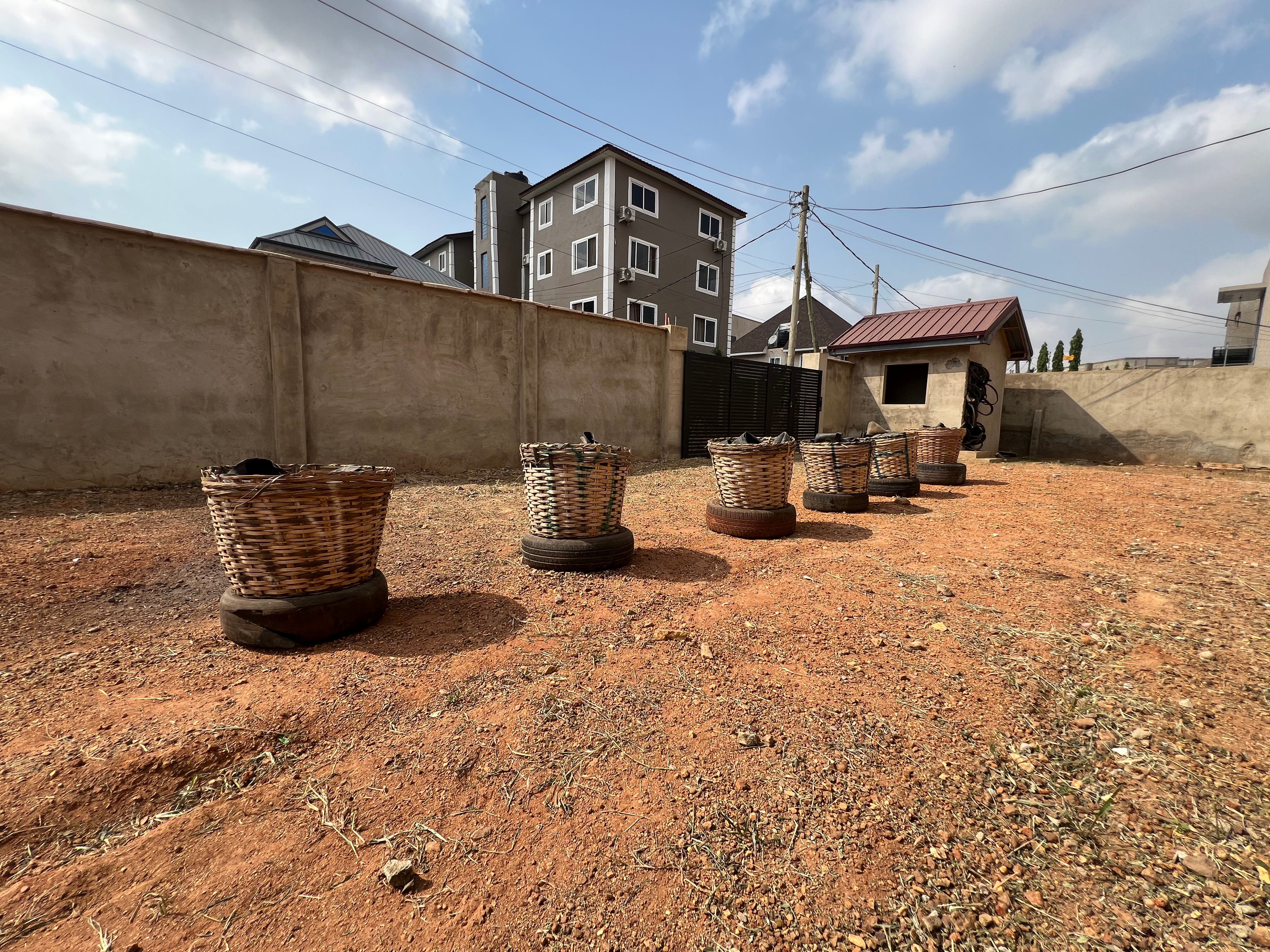
My installation asks: what happens when we apply the visual and commercial language of the market to objects typically excluded from economic consideration?
This positioning represents a complete transformation in the tubes’ social status—from waste accumulating in vulcanizer shops to commodities worthy of market presentation and potential purchase. It’s not merely aesthetic but fundamentally economic, challenging the arbitrary boundaries between valuable commodity and worthless waste.
Why Market Logic Matters in My Practice
Ghana’s commercial spaces—from large markets to small neighborhood shops—operate on principles of display, accessibility, and social exchange. The presentation of goods in baskets signals their availability for negotiation and purchase, whether at a major market stall or a kenkey seller’s corner store. The basket becomes both container and advertisement, both functional tool and economic statement.
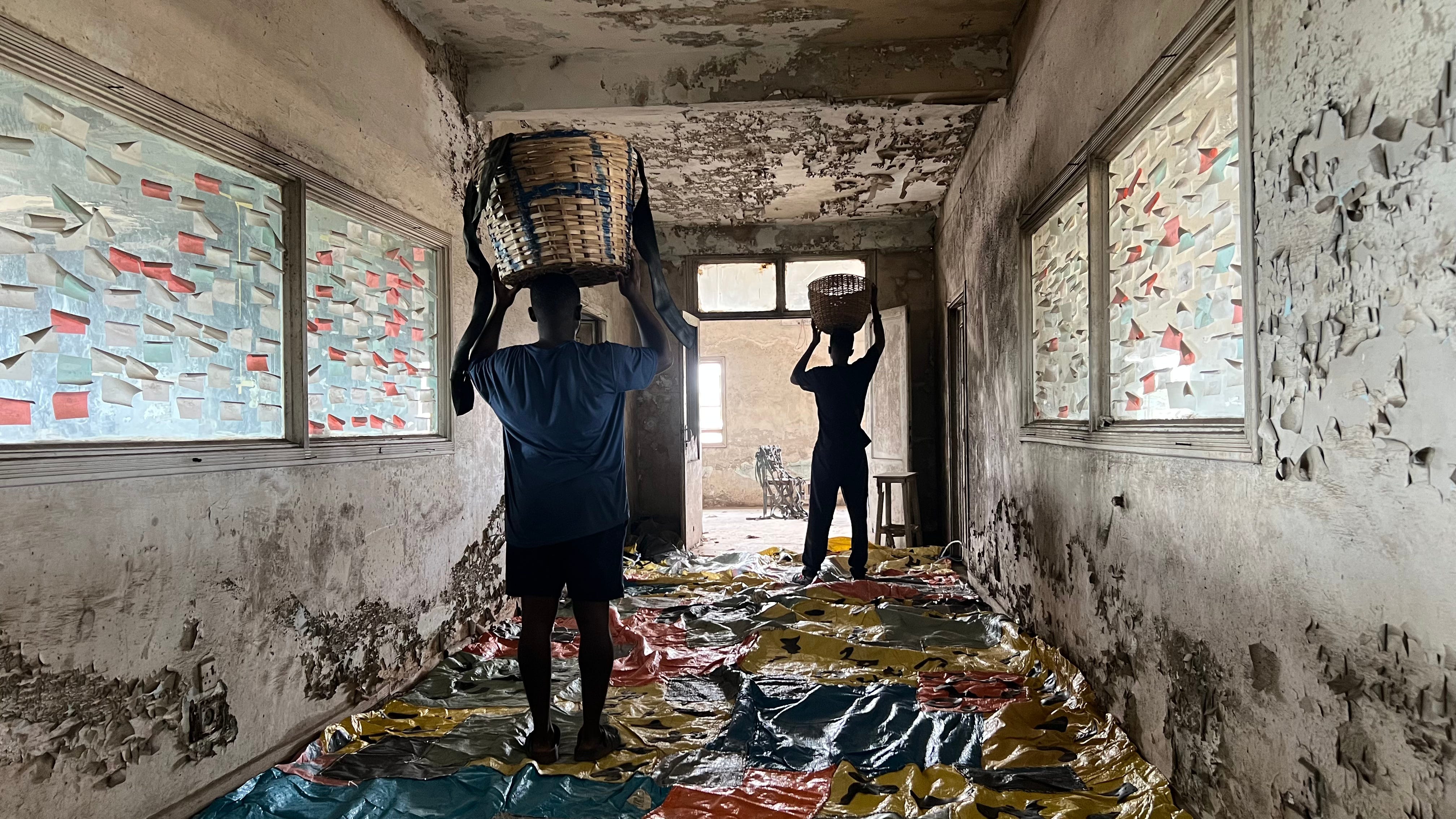
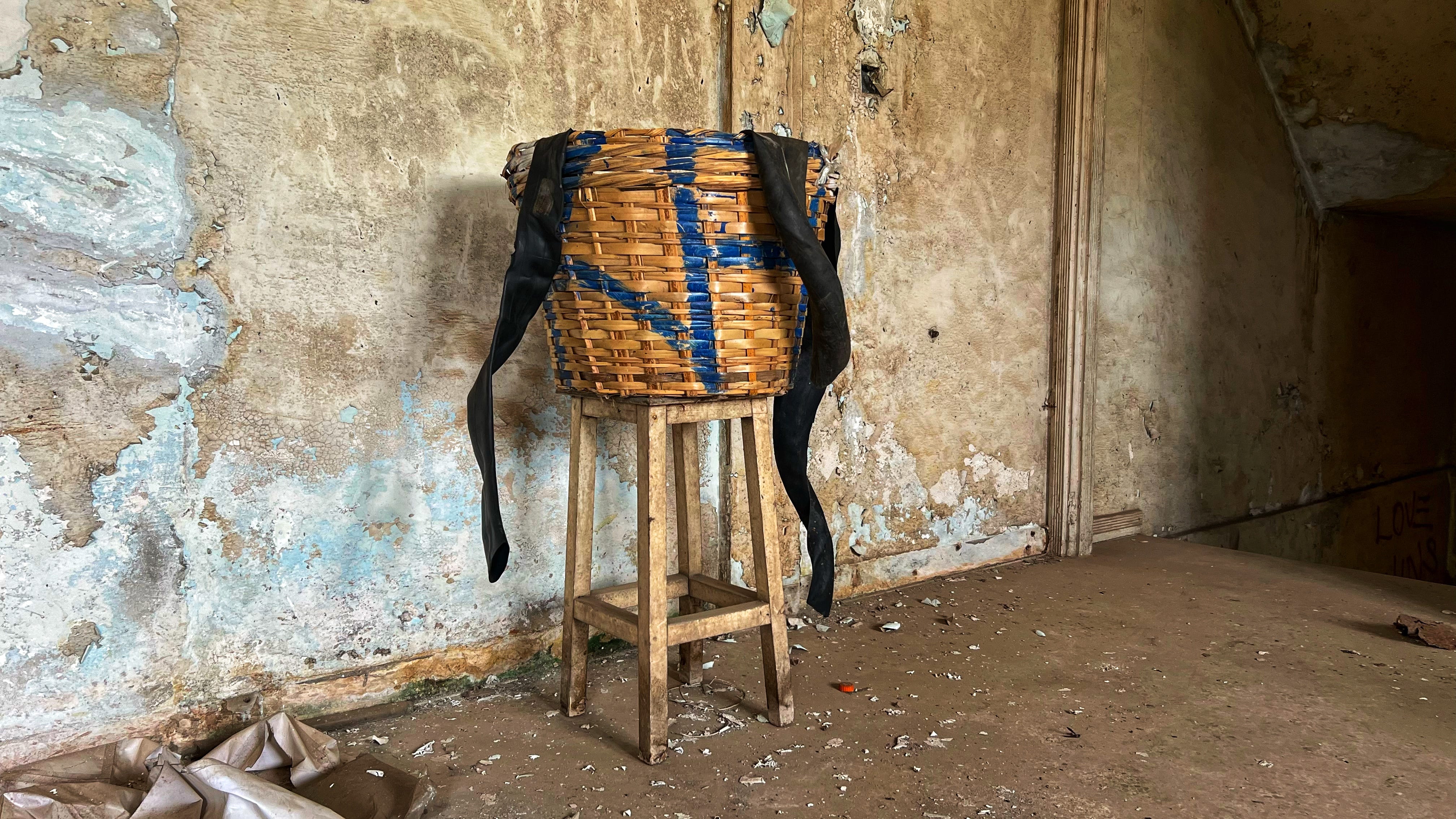
My Inner Tube Market adopts this same logic that operates throughout these various commercial spaces. The discarded baskets I’ve gathered from local shops and vendors, marked with fading farm logos and bearing the wear patterns of their transport and use, become the display mechanism for another category of discarded object. This creates multiple layers of meaning:
Double Discard: Both my containers (baskets) and my commodities (inner tubes) are objects that have been deemed worthless by their previous economic contexts, yet I reposition them as a complete commercial unit.
Cultural Translation: I use familiar market vocabulary—the basket-as-display-container—to present unfamiliar commodities, making the invisible visible through established commercial practices.
Value Proposition: By positioning tubes as purchasable commodities rather than waste, my installation suggests that value is not inherent in objects but rather socially constructed through presentation, context, and cultural agreement.
Weaving as My Foundation
The fact that my broader artistic practice involves weaving inner tubes into tapestries adds crucial conceptual depth to this installation. When I weave discarded inner tubes using traditional techniques, I’m engaging in a form of cultural and economic transformation—taking worthless industrial waste and working with it through processes that reference valuable cultural practices.
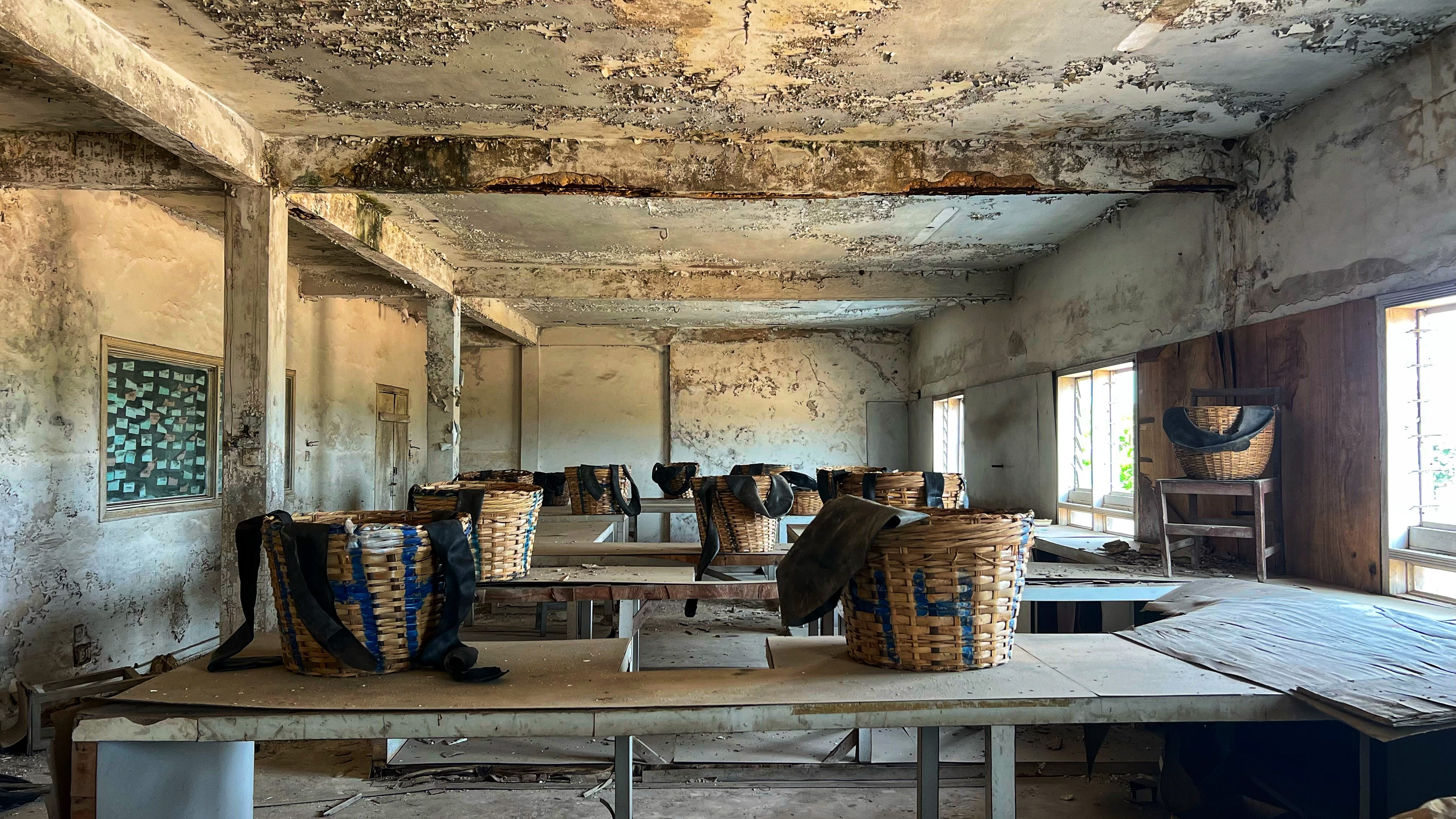
Weaving has been a traditional skill in Ghana for generations, particularly among the Gurune people of northern Ghana, with basket weaving done mostly by women to supplement subsistence farmers’ incomes. By applying these traditional weaving techniques to industrial waste, I’m bridging cultural knowledge systems with contemporary material challenges.
My installation thus presents two moments in the life of inner tubes: first as raw materials positioned for market exchange (demonstrating their potential for commodification), and elsewhere in my practice as woven tapestries (demonstrating their potential for cultural transformation). The baskets serve as both inspiration for my weaving technique and display containers for the unchanged tubes.
An Alternative Economy
The Inner Tube Market attempts a straightforward application of market logic to non-market objects. In doing so, it raises several questions that inform my practice:
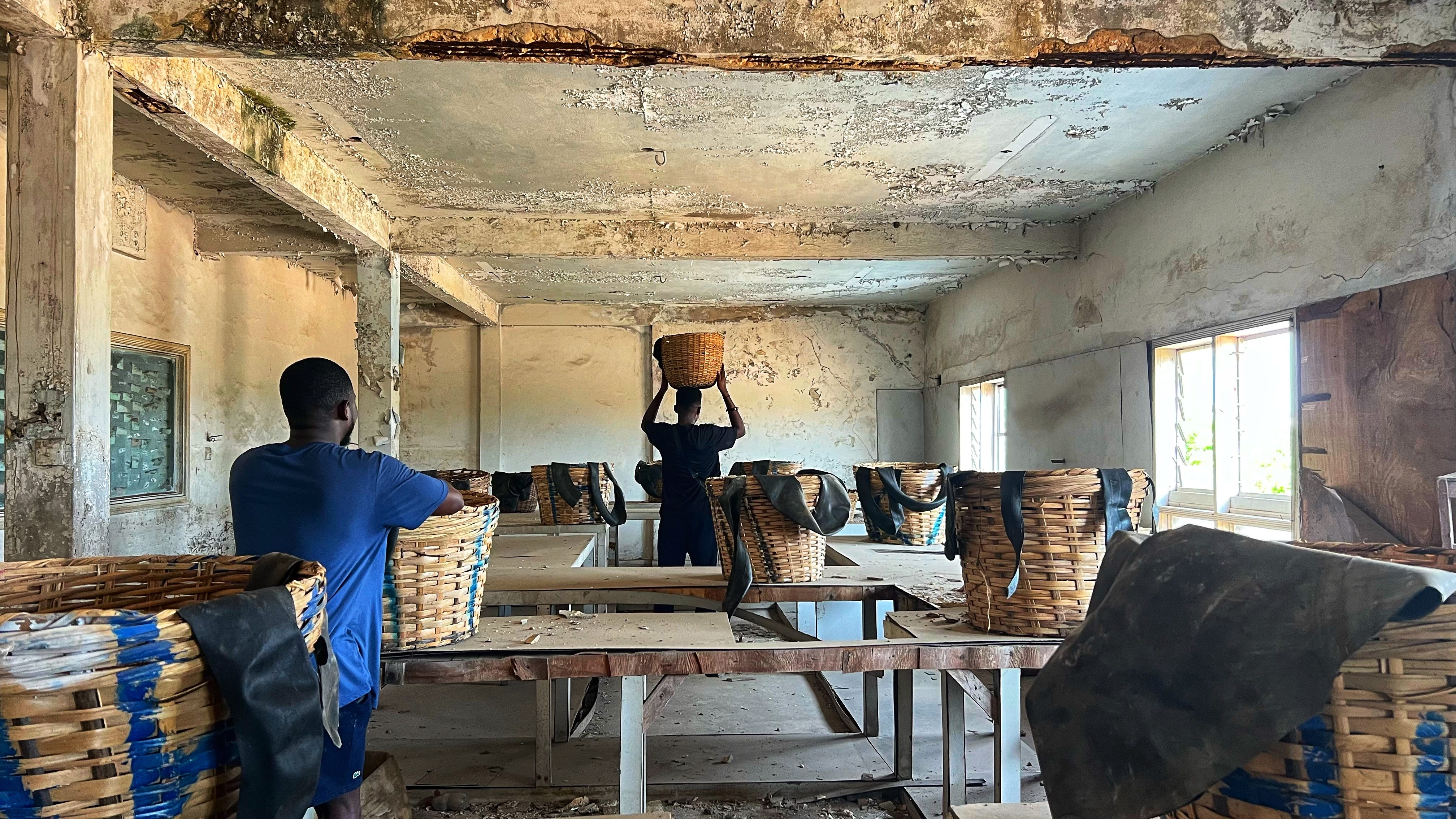
Visibility: Waste typically operates through invisibility—we discard objects by removing them from view and consideration. Markets, by contrast, operate through hypervisibility. By making waste visible through market presentation, I force engagement with materials we normally ignore.
Exchange Value: Markets create value through the possibility of exchange. By positioning tubes as available for purchase, I suggest that waste objects might possess latent economic potential that our current systems fail to recognize.
Cultural Authority: Ghana’s commercial spaces—from markets to local shops—carry cultural authority as sites of legitimate economic activity. By borrowing this authority, I lend legitimacy to waste objects, suggesting they deserve the same consideration given to traditional produce and goods.
What I’m Really Proposing
My Inner Tube Market doesn’t simply critique waste or celebrate recycling. Instead, I’m proposing an alternative economic model where waste streams become commodity flows. The installation suggests that with different systems of display, different contexts of presentation, and different cultural frameworks of value, discarded objects could participate in economic circulation rather than economic exclusion.
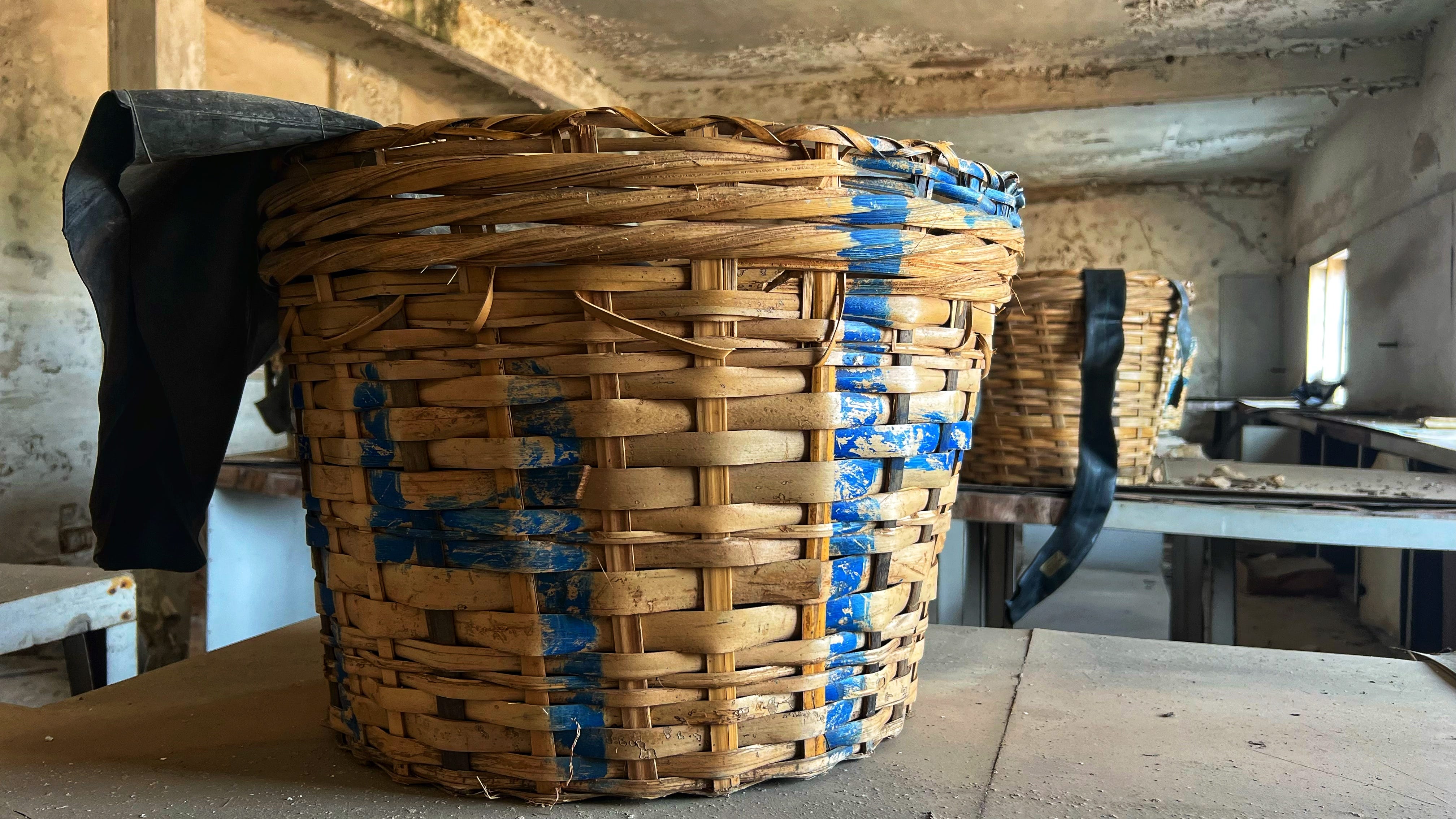
This proposition feels particularly relevant within the Ghanaian context, where informal commercial spaces and creative reuse already demonstrate alternative approaches to value creation—from major markets to the smallest neighborhood vendor. My installation builds on these existing practices while extending their logic to materials typically excluded from economic consideration.
The installation’s title becomes my thesis: this is indeed a market for inner tubes, a place where these discarded objects are positioned as purchasable commodities rather than worthless waste. Through this simple but radical repositioning, my work reveals how arbitrary our distinctions between valuable and valueless objects truly are, while honoring the cultural wisdom embedded in Ghana’s commercial practices at every scale—from the kenkey seller reusing a tomato basket to the market vendor displaying fresh produce.
Conclusion: Inviting a Different Way of Seeing
When I place waste within the containers and contexts typically reserved for valuable goods, I’m suggesting that value itself might be more fluid, more socially constructed, and more subject to creative intervention than our economic systems typically acknowledge.
What I’m trying to capture with the Inner Tube Market is this idea: that we might see waste as commodity simply by treating it as such. Not through argument or didactic messaging, but through direct action—actually presenting waste as commodity, actually using market display techniques, actually positioning discarded objects within the frameworks we use for valuable goods.
This is my attempt at showing how we might see differently, value differently, and imagine economies that recognize potential where others see only problems. Whether it works or not, I hope it invites viewers to question why we discard what we discard, and what might change if we simply repositioned those same objects within different contexts of value.
Subscribe to DELA ANYAH
Launched 3 months ago
Projects, reflections, and research from Dela Anyah’s practice in sculpture, installation, and material exploration.
SubscribeBy subscribing, I agree to Substack's Terms of Use, and acknowledge its Information Collection Notice and Privacy Policy.
1 Like∙1 RestackDiscussion about this post
Mapping Ghana’s Repair Spaces: The Vulcaniser ArchiveA long-term documentary project tracing the transient workshops that sustain Ghana’s mobility.Oct 13 • DELA ANYAH1 The Vulcaniser Shop as Exhibition Space: Redefining Art's Geography Through Community InterventionAn exploration of Dela Anyah's 'Homecoming' series and the transformation of utilitarian spaces into sites of artistic dialogue.Sep 16 • DELA ANYAH1
Ready for more?
Subscribe© 2025 DELA ANYAH · Privacy ∙ Terms ∙ Collection noticeStart your SubstackGet the appSubstack is the home for great culture